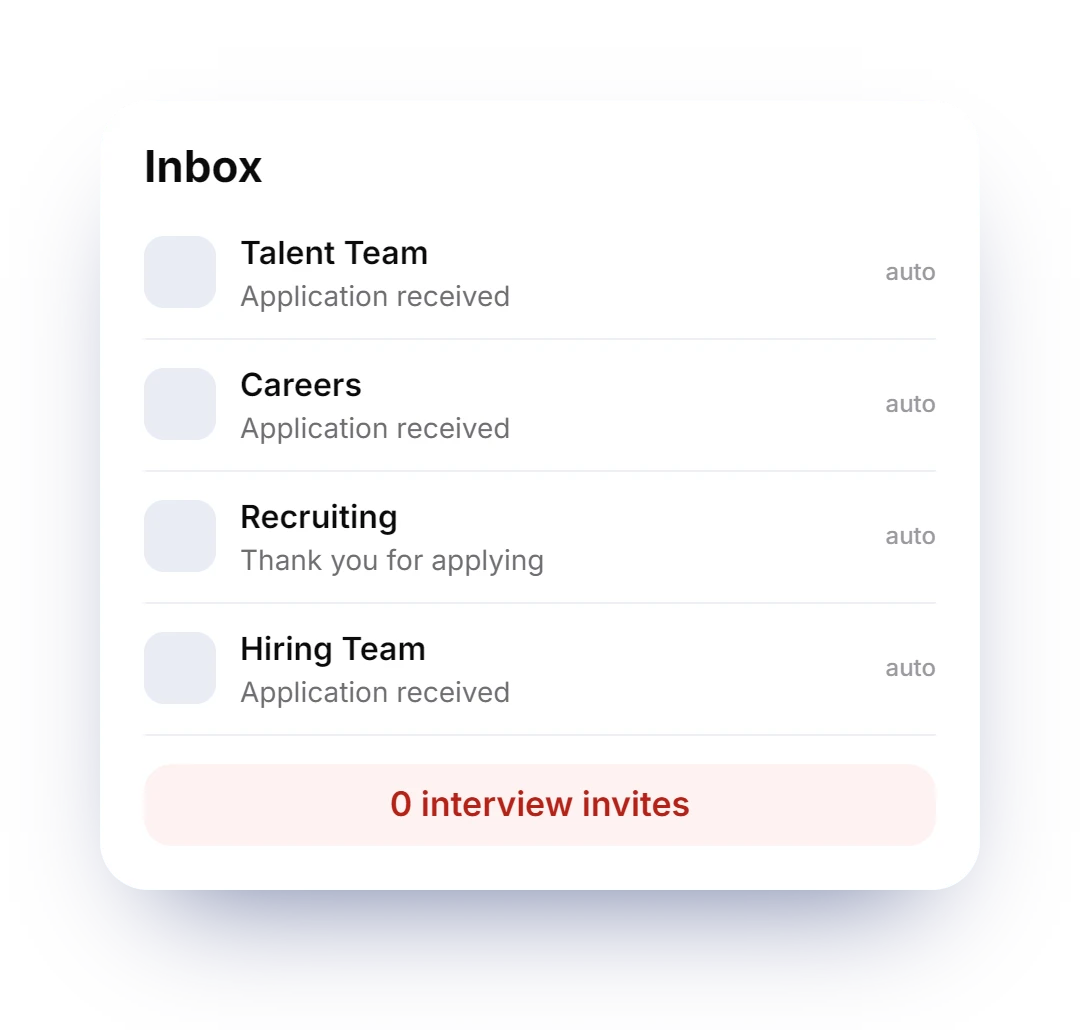
You have sent fifty applications, maybe a hundred, and heard nothing back. It is easy to decide something is wrong with you. Usually it is not. Hiring has changed, and most applications now fail for reasons that have little to do with how good the candidate is.
In short. Recruiters get more than twice as many applications as three years ago, so most are never read. Many are rejected automatically by one wrong answer to a screening question. Some go to jobs that were never really open. The fix is not more applications; it is better-aimed ones.
You are not alone in this: in a Harris Poll reported by Fortune, 40% of unemployed job seekers said they had not had a single interview that year. Here is what is happening on the other side of the form.
1. The recruiter is buried
Greenhouse data shows jobs on its platform received an average of 244 applications each in 2025, more than double the figure for 2022. Ashby, another hiring system, reports that the number of applications per hire roughly tripled between 2021 and 2024. Recruiter teams did not grow to match.
So recruiters triage. They read the strongest-looking applications first and often stop long before the end of the pile. An application that is merely fine sits in the unread middle.
Average applications per job on Greenhouse
What to do: stop measuring your week in applications sent. A smaller number aimed at roles you clearly fit will be read more often than a large number sent everywhere.
2. A screening question rejected you in seconds
Many application forms include “knockout” questions: Are you authorized to work in the US? Do you need visa sponsorship? Can you work on site? How many years of experience do you have? What salary do you expect?
Employers can set these to reject automatically. JazzHR’s own documentation describes candidates who answer a knockout question the “wrong” way being moved straight to a Not Hired status. No person sees the resume. You just never hear back, or you get a polite rejection minutes after applying.
Will you now or in the future require visa sponsorship to work in the US?
What to do: read every screening question properly, every time. A single mistaken “yes” to sponsorship, or a salary far above the range, can undo an otherwise perfect application.
3. Your resume landed in the middle band
Hiring software increasingly ranks applicants before a person looks. Workday’s HiredScore, for example, grades candidates A to D by how well they meet the job’s requirements, and its documentation shows recruiters screening A and B candidates first.
A generic resume, or one that never clearly shows the job’s must-have skills, tends to land in the middle: not rejected, just not read.
How ranking software sorts applicants
What to do: for each role, make sure the requirements you genuinely meet are easy to see, in the job’s own words, with evidence: a number, a result, a tool you used. Do not copy the job description and do not claim skills you lack. That backfires at interview.
4. The job was never really open
Greenhouse counts 18–22% of the jobs posted on its platform as “ghost jobs” in any given quarter: postings kept up for appearances, to collect resumes, or long after the role was filled. Three in five candidates in its 2024 survey believed they had applied to one.
About 1 in 5 postings is a ghost job
What to do: check the role is listed on the employer’s own careers page, prefer postings from the last few days, and be wary of jobs reposted again and again.
5. You applied after the rush
Popular roles fill their interview slots fast. Recruiters often review in batches and close a posting once they have enough strong candidates. An application sent three weeks after a job went up competes with hundreds that arrived first.
What to do: check for new postings every day or two and apply early. Fresh jobs are worth more than old ones.
6. Cold applications have long odds
Industry data puts the share of applicants who reach an interview at around 3%. Candidates who come in through a referral or an internal move do far better: Ashby’s data shows them much more likely to be interviewed and hired than people who apply cold.
What to do: keep applying, but alongside it, ask people you know at your target companies whether they would refer you. One good referral can be worth dozens of cold applications.
What to change this week
- Narrow your list to roles where you meet the basic requirements.
- Apply within the first few days of a posting going up.
- Answer every screening question carefully, especially work authorization, sponsorship, location and salary.
- Tailor each resume to show the must-haves you really have, with evidence.
- Skip stale and reposted listings; confirm the job on the employer’s site.
- Ask for one referral a week.
Read next: How to actually get interviews in 2026.
How TrulyPlaced helps
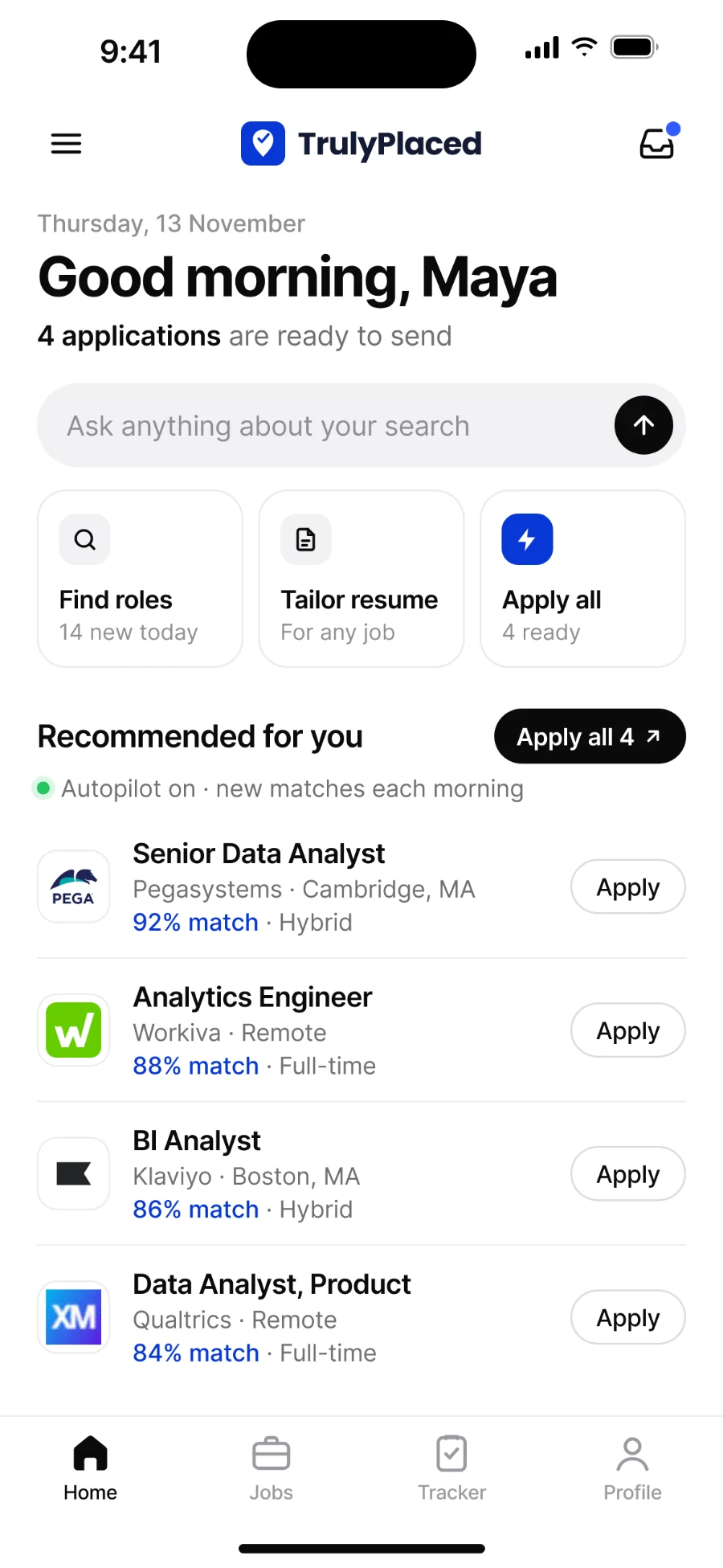
TrulyPlaced Autopilot was built around these problems. It matches you to real US jobs scored against your resume, tailors your resume and cover letter to each one without changing your facts, answers screening questions from the answers you confirmed (and asks you when it is not sure), checks that a job is still open right before applying, and flags postings that look fake.
Get started freeUpload your resume and see the jobs that fit you
Questions people ask
Why am I not getting interviews even though I am qualified?
Usually because your application is never read: recruiters receive hundreds of applications per job, screening questions can reject automatically, ranking software puts generic resumes in the middle of the pile, and some postings are not real jobs. Fewer, better-aimed applications sent early tend to do better.
How many applications does it take to get an interview?
Industry data puts the applicant-to-interview rate around 3% for cold applications, so roughly one interview per 30 applications on average. Targeted applications and referrals do considerably better.
What are knockout questions?
Screening questions on an application form, such as work authorization, visa sponsorship, location, experience or salary, that an employer can set to reject applicants automatically if the answer does not match.
Sources
- Geekflare: ATS statistics 2026 (citing Greenhouse’s 2025 data)
- Ashby Talent Trends: inbound applications
- JazzHR: knockout questions
- Workday HiredScore: candidate grades
- Greenhouse: 2024 State of Job Hunting report (ghost jobs)
- VisualCV: resume statistics and 2026 hiring trends
- Ashby Talent Trends: referrals
- Fortune: 40% of job seekers had no interview this year (Harris Poll)
More from the blog
November 2026
See the jobs that fit you, every morning
Upload your resume. TrulyPlaced finds real US roles, scores each one against your experience and tailors every application.
Get started free