AI auto-apply tools promise to send hundreds of applications while you sleep. Some people swear by them; others send 700 applications and get no interviews. The difference is rarely the AI itself. It is how the applications are aimed and what goes into them.
In short. Most employers do not ban automated applications. They are simply overwhelmed, and generic, mistaken or duplicate applications lose the triage. Automation helps when every application is aimed at a role you fit, answers questions correctly, and contains nothing you cannot defend in an interview.
What employers actually do
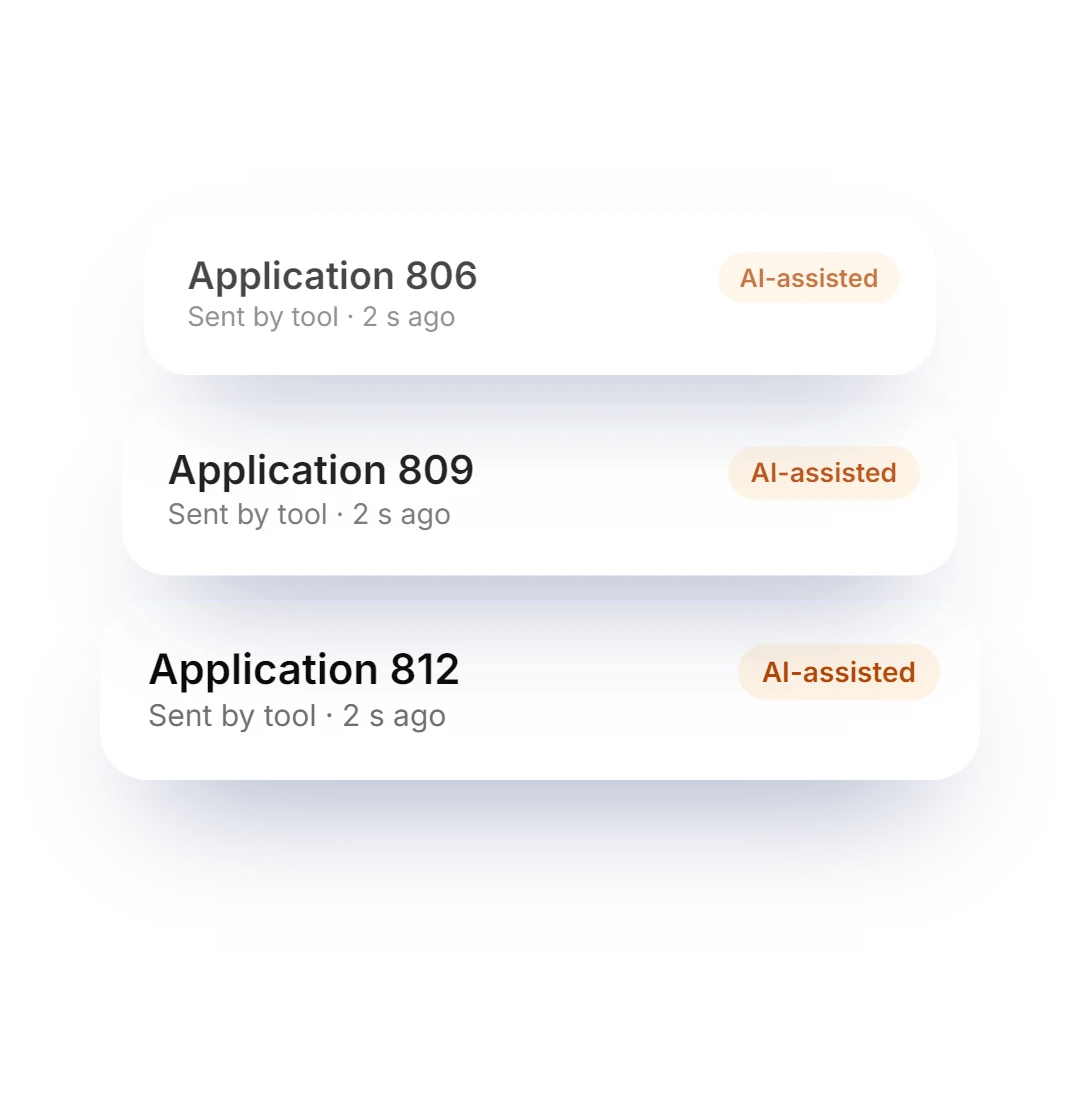
Very few employers run a rule that says “reject anything sent by a tool”. Workable’s chief executive has said around 10% of applications on its platform now come from AI mass-apply tools, and he argues against blanket rejection. What employers do instead is triage under pressure, and some systems now label automated applications. Workable, for example, tags applications as “AI-assisted” when they arrive from tool-generated email addresses, and lets recruiters filter them.
About 1 in 10 applications on Workable comes from a mass-apply tool
So the real question is not “will a bot be detected?” It is “will this application survive a recruiter with hundreds of others to read?”
Where auto-apply goes wrong
1. One wrong answer, repeated everywhere
Screening questions about work authorization, sponsorship, location, salary and experience can reject an application automatically. A tool that fills them from a stale or mistaken profile repeats the same wrong answer on every form, and you never find out why nobody replies.
2. Generic, copied-from-the-posting resumes
In Resume Now’s 2025 survey of 925 HR professionals, 62% said AI-generated resumes without personalization are more likely to be rejected. Resumes that simply mirror the job description read as generic, and ranking software rarely puts them near the top.
Responsible for reporting and dashboards. Team player with strong communication skills.
Built the weekly SQL and Tableau sales report used by 12 regional managers, cutting manual work by a day a week.
3. Details that are not true
Some tools “improve” a resume by changing job titles, inflating experience or adding skills. That may get a callback, but it collapses at interview or at the background check. In ResumeBuilder’s 2021 survey, 41% of people who were hired after lying on a resume had the offer withdrawn when the lie came out.
4. Duplicates and borrowed email addresses
Applying to the same role twice, or to a reposted version of it, adds noise. Tools that use generated email addresses can create several profiles for one person, and recruiter replies may never reach you.
5. Patterns that look like fraud
Hiring systems are adding fraud checks because fake candidates are a real problem. Greenhouse’s Real Talent, for example, flags signals such as a mismatch between a candidate’s location and their internet address, or suspicious contact details, for a recruiter to review. It does not reject automatically, but a flagged application in a busy pipeline is easy to skip.
6. Breaking a platform’s rules
LinkedIn’s User Agreement prohibits bots and automated activity on its service, and accounts that apply in rapid bursts can be paused or restricted. Never let a tool drive your own LinkedIn account.
The blacklist myth
Applying twice, or using a tool, gets you blacklisted for 6–12 months.
Most hiring systems match you by email and merge duplicates. The quieter cost of careless automation is being filtered or ignored.
A common fear is that applying twice, or using a tool, gets you banned by a company for six to twelve months. We found no evidence for that. Most hiring systems simply match applications by email and merge duplicates. The “cool-down” periods people describe at large tech companies apply after an interview, not after an application. The real cost of careless automation is quieter: being merged, filtered or ignored.
When automation genuinely helps
- It applies only to roles you fit, and you can set how good a match must be.
- It tailors each application to the job without changing your facts.
- It asks you when a question needs an answer it does not have, instead of guessing.
- It checks the job is still open and skips postings that look fake.
- It shows you exactly what was sent: the resume, the cover letter and proof of submission.
- It sends at a sensible pace, not hundreds in a burst.
Questions to ask any auto-apply tool
- Can I see every application, with the exact resume sent?
- Does it ever change my titles, dates or skills?
- What happens when a form asks something I have not answered?
- Does it check that a job is still open before applying?
- Whose email address goes on the application, and where do replies go?
- Does it automate LinkedIn or Indeed? (If yes, think twice.)
Related: Applying everywhere but not getting interviews? Here’s why.
How TrulyPlaced approaches it
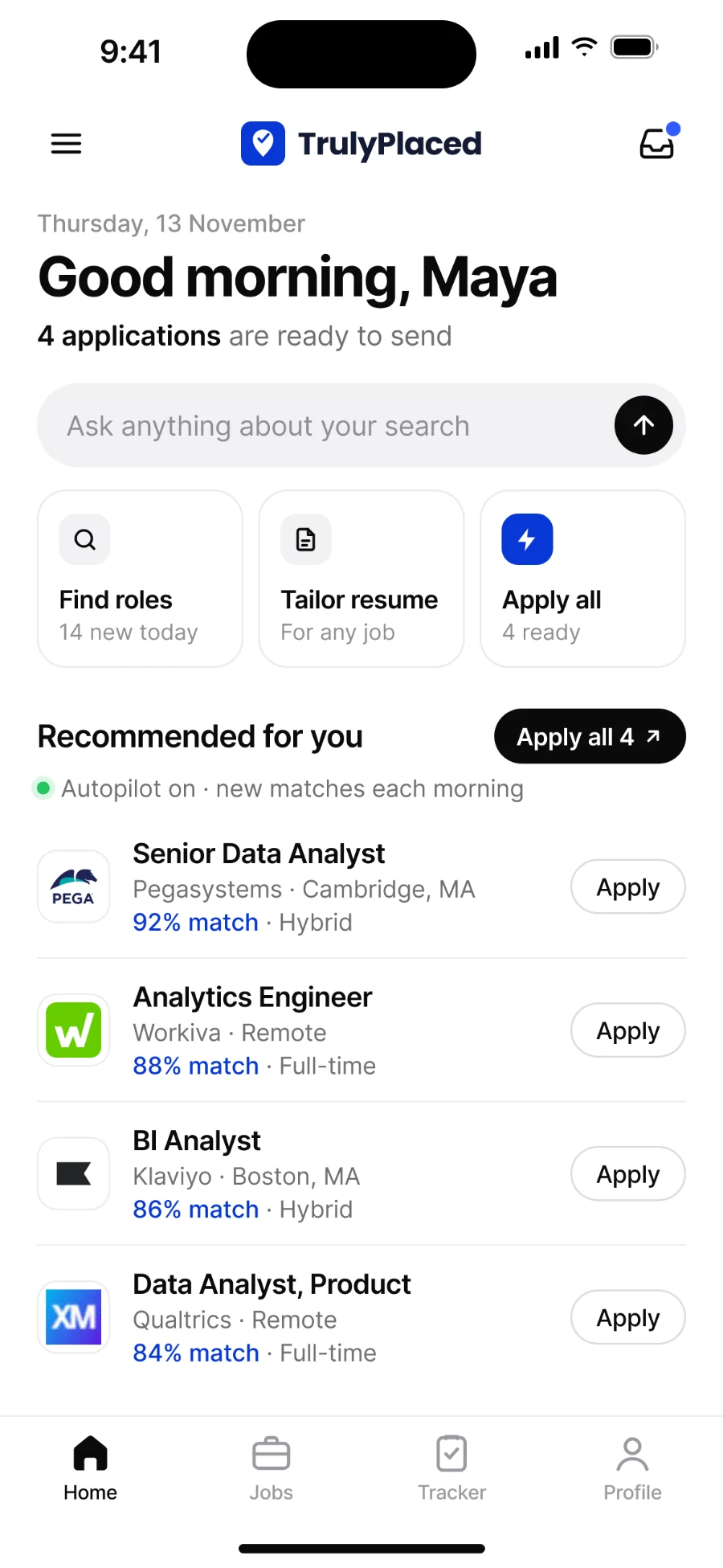
TrulyPlaced Autopilot applies only to jobs that match your resume above a score you choose, rewrites wording for each job while keeping your facts unchanged, asks you rather than guessing when a form needs something new, checks the job is still open, flags likely fake postings, and saves a screenshot of every confirmation. It applies on employers’ own job pages, never through your LinkedIn account, and you set how many it sends a day.
Get started freeUpload your resume and see the jobs that fit you
Questions people ask
Do employers reject applications sent by AI auto-apply tools?
Rarely as a blanket rule. Most employers triage a very large number of applications, and generic, mistaken or duplicate applications lose that triage. Some systems, such as Workable, label applications that arrive from tool-generated email addresses as AI-assisted.
Can applying twice get me blacklisted?
There is no evidence of a standard six-to-twelve-month ban for applying twice. Most hiring systems match by email and merge duplicate applications. Cool-down periods reported at large tech companies apply after interviews.
Is it safe to use auto-apply on LinkedIn?
LinkedIn’s User Agreement prohibits bots and automated activity, and burst applying can lead to restrictions. Use tools that apply on employers’ own job pages instead of driving your LinkedIn account.
Sources
- Workable: AI mass-apply tools, signal vs noise
- Workable Help: managing AI-generated and automated applications
- Resume Now: AI and the Applicant Report (2025)
- TopResume: where employers draw the line on AI in hiring
- ResumeBuilder: 1 in 3 Americans admit to lying on a resume (2021)
- Greenhouse: how Real Talent spots hiring fraud
- LinkedIn User Agreement
- JazzHR: knockout questions
More from the blog
November 2026
See the jobs that fit you, every morning
Upload your resume. TrulyPlaced finds real US roles, scores each one against your experience and tailors every application.
Get started free